Yuk, pelajari apa saja kaidah kebahasaan narrative text, beserta dengan pengertian, contoh teks dan penjelasannya.
—
Once upon a time, there was a man who was living in North Sumatra. One day, he caught a big golden fish in his trap and it turned into a beautiful princess. They got married, lived happily and had a daughter. Few years later, the man was angry with his daughter and shouted that she was daughter of a fish. The man had broken his promise. Soon the whole area got flooded and became Toba Lake. The woman turned back into a fish and the man became the island of Samosir.
Kira-kira, termasuk ke dalam teks apa sih cerita di atas? Teks yang bersifat imajinatif atau fiktif seperti di atas disebut dengan teks narasi. Yap,
narrative text
atau teks narasi biasanya bisa kamu temukan di cerita dongeng, novel, atau buku fiksi lainnya.
Lalu, apa sih yang membedakan
narrative text
dengan jenis teks lainnya? Yuk, kita bahas kaidah kebahasaan dan contoh dari
narrative text
berikut ini.
Baca juga: P
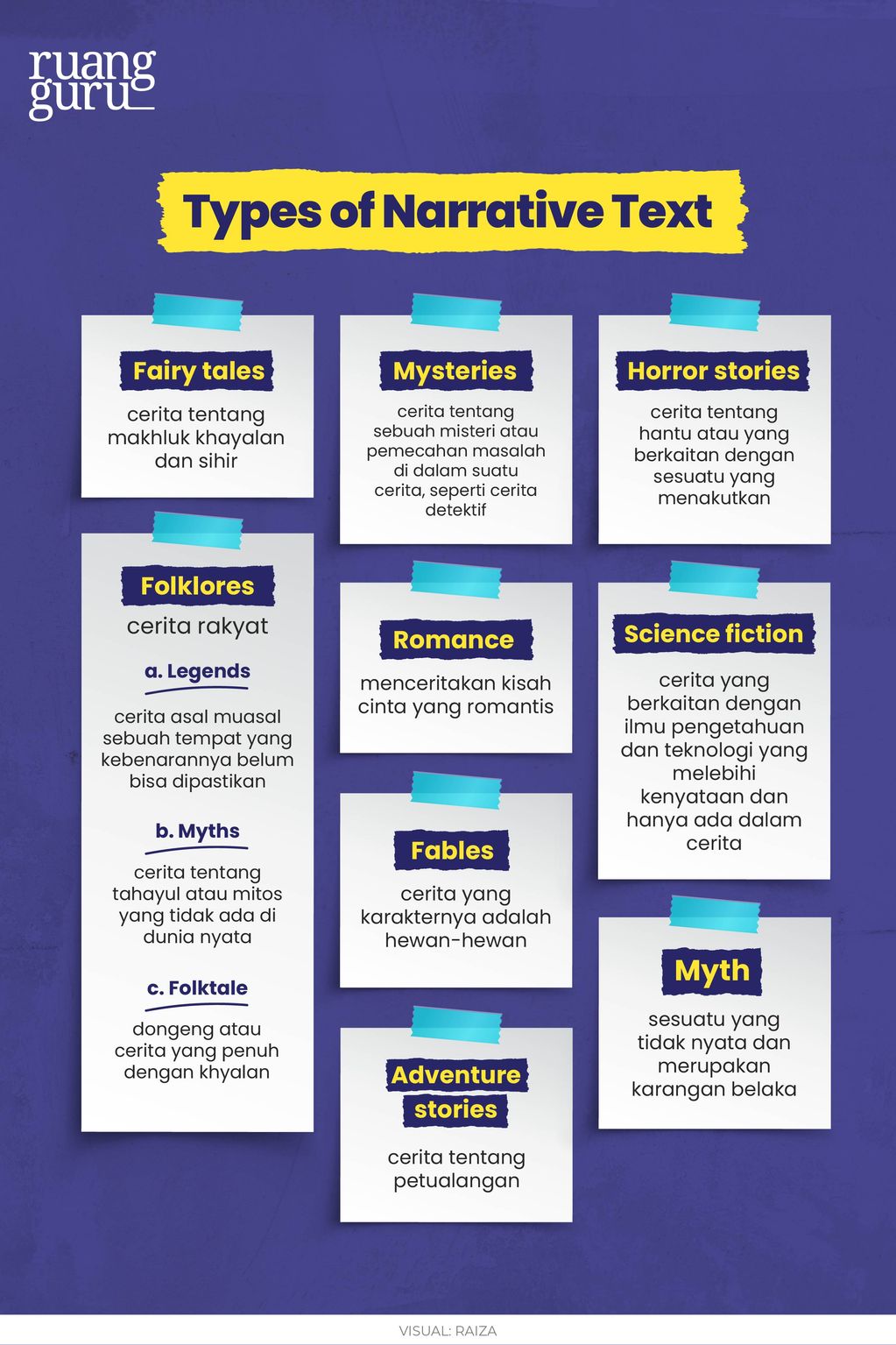
ahami Pengertian Narrative Text, Struktur & Jenisnya
Definition of Narrative Text (Pengertian Teks Narasi)
Narrative text is the type of text that tells a chronological story in the past tense.
Kalau dalam bahasa Indonesianya, teks narasi adalah salah satu jenis teks yang menceritakan tentang sebuah cerita yang urut dalam kalimat bentuk lampau.
Biasanya, cerita ini bersifat fiktif dan bertujuan untuk menghibur pembacanya.
Therefore, the aim of narrative text is to entertain the readers through the amusing story.
Ingat ya,
tujuan teks narasi hanya untuk menghibur pembacanya saja.
Baca Juga:
Recount Text: Struktur, Kaidah Kebahasaan dan Contohnya
Example of Narrative Text (Contoh Teks Narasi)
The Ugly Duckling
Once upon a time, there was a mama duck who had 10 eggs. One day, as she was waiting for her eggs to hatch, she felt something cracking right beneath her…
Crack. Crack. Crack.
1, 2, 3, 4, 5, 6, 7, 8, 9.. Nine eggs hatched. Mama duck eagerly waited for the last egg to hatch. Maybe because this egg was bigger than the others, it took more time to hatch. But slowly, the egg cracked, and a duckling came out of the shell.
The nine duckling were so cute. They looked just like their mother, but the last one looked different. He had a beak that was a little too long, and feathers that were gray and scruffy. His face looked quite different too. You can say, the little duck looked ugly in comparison to his siblings.
But mama duck had promised herself that she would love all her children equally. Months passed by. When she taught her ducklings how to quack, each of the nine ducklings were able to do it well. However, when the last duckling tried to quack, it came out croaky. The other nine laughed at hime, and that made him feel very sad. To make it even worse, there were two other ducks passing by their pond.
“This one lokks nothing like his brothers and sisters,” one of them sneered.
“He sure is ugly,” the other one added.
They picked on the ugly duck. Mama duck became embarrassed of him as she would ask her youngest duckling to walk in a separate line with his brothers and sisters.
When the night came, and everybody was asleep, the ugly duckling ran away. He waddled from one pond to another pond, one lake to another lake, looking for a warm family to live with. He was determined to escape.
When he took a rest, a woman suddenly picked him up.
“Just what we’re looking for!” she said to her husband.
The ugly duckling was happy. He thought he finally found a family. The couple then took care of him, with the hope that he could lay some eggs for them.
Months passed by. The farmers grew tired of him and decided to put him back in the lake where they found him.
Seasons changed, and the ugly duckling miraculously survived the freezing winter. He felt really tired from waddling so much, so he rested himself on a lake. All of a suden, two big hands picked him up, putting him close to his body to warm him up.
“You poor little thing,” the man said.
It turned out that the man was a farmer. This time, the ugly duckling really found a place to stay. The kind farmer took really good care of him until he grew bigger. Until one day, he decided to let the ugly duckling go to enjoy his life back in the lake again.
“Be free in the lake. Swin beautifully as you were born to do so,” said the man.
A tear rolled down the ugly duckling’s face. With a heavy heart, he swam around until he met a group of swans, he approached them shyly, and one of the swans siad, “You are the most beautiful swan I have ever seen!”
“Your feathers…They are so white and shiny,” another one replied.
The ugly duckling then looked at his reflection in the water and he was very surprised. He then realized what happened. He was no longer the ugly duckling. He was a beautiful white swan.
Language Features in Narrative Text (Kaidah Kebahasaan di Teks Narasi)
Nah, berdasarkan contoh teks narasi dengan judul The Ugly Duckling di atas, kita lihat yuk kaidah kebahasaan yang ada pada
narrative text
berikut ini.
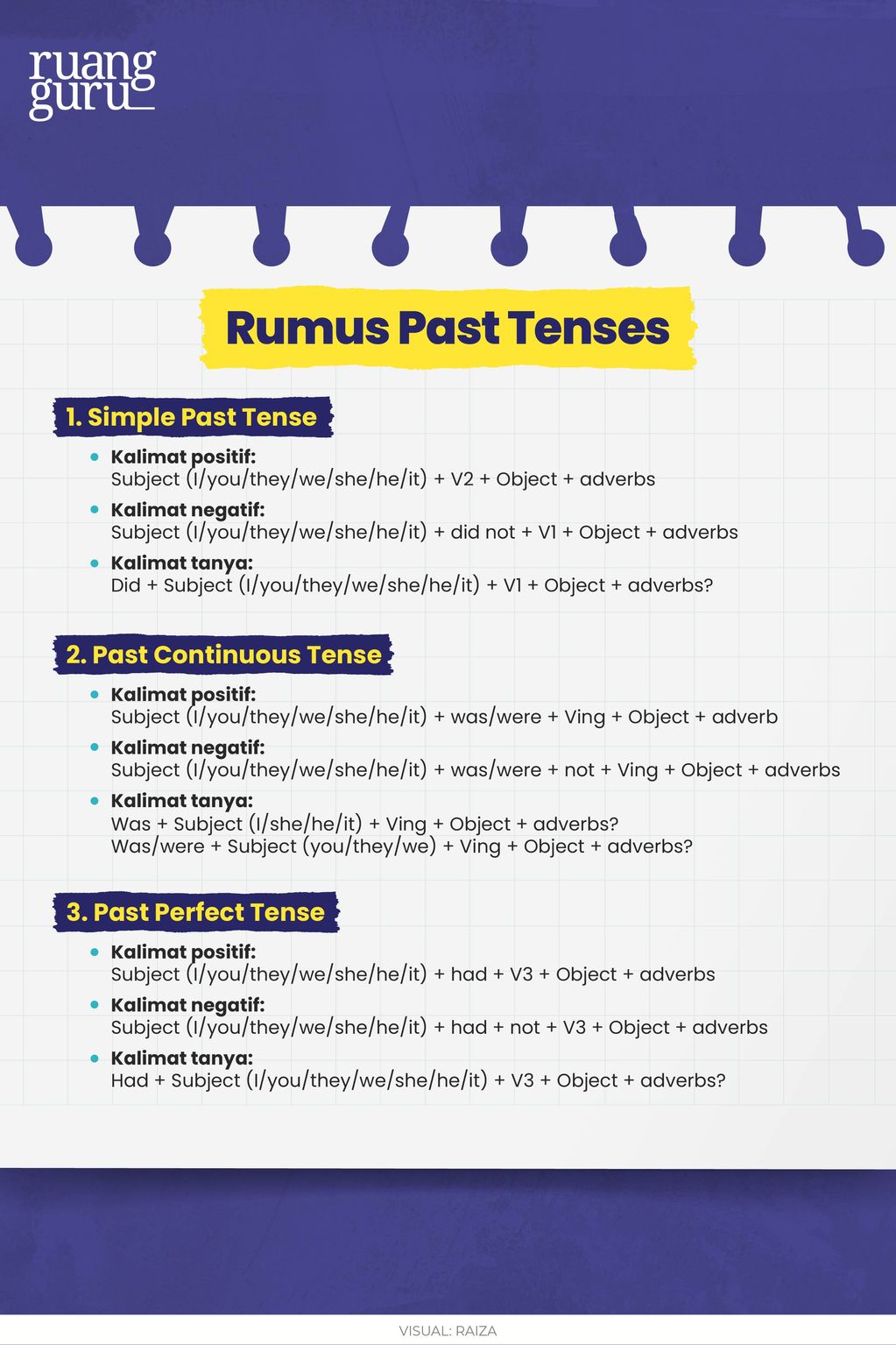
1. Past Tenses
Past Tenses
pasti digunakan dalam teks naratif karena teks ini menceritakan kejadian di masa lalu. Nah, ada tiga jenis
Past Tenses
yang menjadi ciri khas dari
narrative text
, yaitu
Simple Past Tense, Past Continuous Tense
dan
Past Perfect Tense
.
a. Simple Past Tense:
digunakan untuk menyatakan suatu peristiwa yang terjadi di waktu lampau.
Contoh:
She felt
something cracking right beneath her.
b. Past Continuous Tense:
digunakan untuk menyatakan suatu peristiwa yang sedang berlangsung di waktu lampau.
Contoh:
One day,
she was waiting
for her eggs to hatch.
c. Past Perfect Tense:
digunakan untuk menyatakan bahwa ada suatu kejadian atau aksi yang telah selesai pada suatu titik di masa lalu, sebelum ada kejadian lainnya (di masa lampau juga) terjadi.
Contoh:
Mama duck had promised
herself, that she would love all her children equally.
2. Adverb of Time (Keterangan Waktu)
Teks narasi biasanya diceritakan dengan
urutan kejadian atau jalan ceritanya
yang biasa kita sebut dengan
alur
. Maka dari itu, dalam teks narasi pasti terdapat
adverb of time
atau keterangan waktu. Nah, berikut ini adalah contoh
adverb of time
yang bisa kamu temukan di teks narasi.
Once upon a time
: Dahulu kala
One day
: Suatu hari
This time
: Kali ini
Until one day
: Sampai suatu hari
3. Time Conjunction (Kata Hubung Waktu)
Selain keterangan waktu, kamu juga bisa menemukan
time conjunction
atau kata hubung waktu
di teks narasi. Contoh dari time conjuction yang umum digunakan dalam teks narasi adalah sebagai berikut.
When
: saat
Until
: sampai
After
: setelah
Before
: sebelum
As
: disaat
As soon as
: secepat saat
Since
: sejak
While
: saat
Once
: pada
4. Direct Speech (Kalimat langsung)
Direct speech
adalah ucapan langsung yang diutarakan oleh seseorang dalam cerita. Jadi, seakan-akan pembaca bisa merasakan suasana seperti pada cerita tersebut.
“This one looks nothing like his brothers and sisters,” one of them sneered.
Contoh kalimat
direct speech
di atas pasti sering kamu temukan saat membaca cerpen atau novel kan? Nah, untuk menulis
direct speech
ada cara khusus penulisannya, lho. Apa saja?
Aturan penulisan
direct speech
:
Dialognya diapit oleh tanda petik, setelah kalimat
direct speech
diberikan tanda koma, dan tulis pelapornya dengan
saying verb
-nya.
Contoh:
“He sure is ugly,” the other one added.
Jika pelapornya berada di awal kalimat langsungnya, tulis pelapornya dengan
saying verb
-nya, kemudian beri tanda koma, tambahkan tanda kutip setelah tanda koma, dan isi dengan dialognya. Akhiri dengan tanda titik.
Contoh:
One of the swans said, “You are the most beautiful swan I have ever seen.”
Apabila dialog diakhiri dengan tanda tanya atau tanda seru dan pelapornya berada di akhir dialog, maka dialog di dalam tanda kutip tidak ada penambahan koma. Tapi, kalau pelapornya berada di awal koma tetap dibutuhkan.
Contoh:
“Just what we’re looking for!” she said to her husband.
—
Mudah ‘kan penjelasannya? Masih banyak hal yang perlu kamu pelajari tentang
narrative text
, lho. Yuk, pelajari lebih lanjut dengan video beranimasi, latihan soal, dan rangkumannya di
ruangbelajar
.